If your car vibrates at idle but drives fine once moving, the problem often points to an issue with engine stability, air/fuel ratio balance, or engine mounts rather than a mechanical fault at low speed. The sudden vibration or slight jerking can be momentarily frustrating, but once you put your foot on the pedal and the symptoms disappear, it can be a little confusing.
Still, vibration at idle can also be due to worn spark plugs, fuel system issues, clogged injectors, or other causes such as vacuum leaks, a bad oxygen sensor, or a faulty idle air control valve. Since vibration disappears during driving, the issue is often low-RPM specific, meaning something is destabilizing the engine under minimal load.
Here’s the truth. To fully understand why your car vibrates at idle but drives fine, you’ll need to eliminate the above causes to pinpoint the problem. Fortunately, this article covers the common causes of a car vibrating on idle, how to diagnose the issue at home, and when you might need to see a professional mechanic.
Why your car vibrates at idle but drives fine
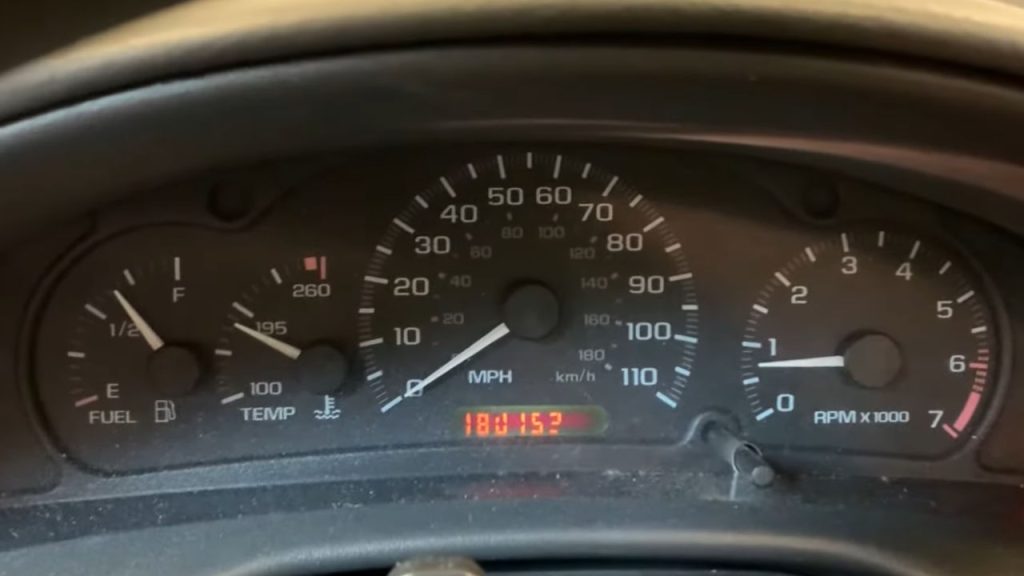
Most vibration issues in vehicles are typically caused by worn-out engine mounts. In this case, when the rubber mounts fail or crack, the engine’s natural vibrations are transferred directly into the cabin. When you press the gas pedal in your vehicle, the forward motion stabilizes the drivetrain, reducing vibration. If you have an automatic transmission vehicle, you’ll notice that vibrations worsen in D (Drive) or R (Reverse) but improve when you shift to N (Neutral).
“When you are idle, put it in neutral and see if it lessens the vibrating. Also, play with being in idle and turning your AC off and on to see if the compressor is part of the issue,” an owner on Reddit recommended a solution to a similar vibrating problem on a 2019 Mazda 3 Hatchback.
Another reason your car vibrates at idle but drives fine is due to a dirty or failing idle air control valve (IACV). Your vehicle’s Idle Air Control Valve functions by regulating the idle speed. When carbon buildup occurs in the system, your vehicle will experience a rough idle.
You’ll notice dips in RPM, occasional near-stalls, and vibration when coming to a stop. A cracked or leaking vacuum or intake line lets in excess air, leading to an uneven idle. When this happens, you’ll notice a hiss in the system and, in some cases, a high or fluctuating idle RPM. If your vehicle’s spark plugs or ignition coils are worn out, they could lead to misfires at low RPMs. The reason you won’t feel the misfires when driving is that higher RPMs mask mild misfires.
Check for slight shaking at a stop and a flashing Check Engine Light (CEL) under load. A dirty throttle body can cause symptoms similar to a faulty idle control valve, since carbon buildup can restrict airflow at idle. You’ll notice low, shaky idle and, in some cases, stalling at stoplights. If your air filters or fuel injectors are clogged, they’ll also make your car vibrate at idle, but smooth out once you press the gas pedal. This is because restricted airflow or uneven fuel delivery disrupts idle combustion. You’ll notice the vibration smooths out while driving because airflow or fuel pressure increases at high RPM.
How to fix idle issues and when to see a mechanic
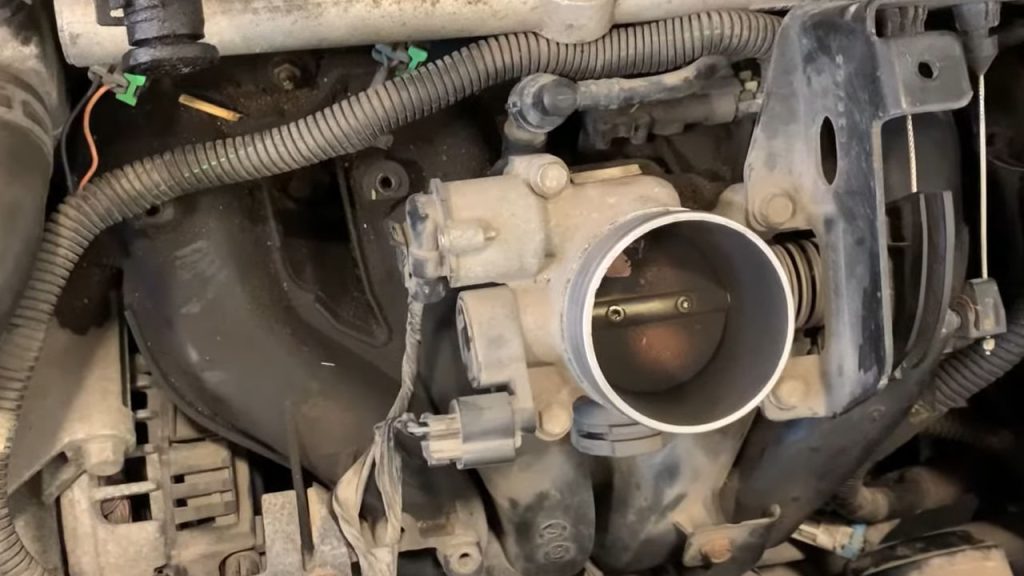
The first thing you’ll need to do when you first notice your car vibrating at idle but drives fine is to shift the vehicle into neutral. If the vibration improves, then your vehicle’s engine mounts are likely worn. Inspect the vacuum hoses for leaks, loose clamps, or collapsed hoses. With the engine on, watch out for a hissing noise around the vacuum lines. If possible, do a smoke test.
Clean your IACV (Idle Air Control Valve) and throttle body. You can use a throttle body cleaner to remove carbon buildup in the throttle area. If you are unsure about how to do this, contact a professional shop for this service. If the symptoms persist, check your spark plugs and air filters, replace them if needed, and run a fuel injector cleaner in the system. If the symptoms persist, drive to your nearest repair shop for a comprehensive diagnosis.
Note: If your vehicle’s vibrations are accompanied by RPM drops, stalling, a strong fuel smell, clicking, knocking, or metallic vibration, the problem could be more serious and require the services of a professional shop.