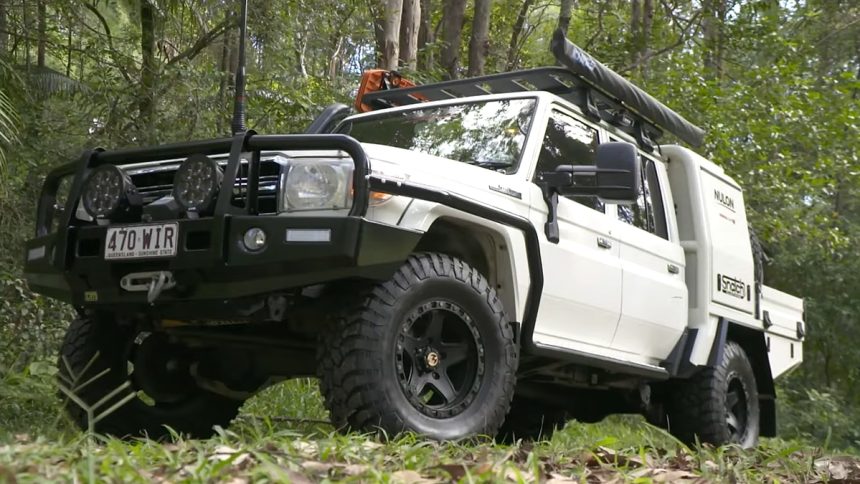
There’s a particular type of madness that grips people who’ve spent years in a Land Rover Discovery 3 before switching to a LandCruiser 79 Series. They know exactly what they’re giving up: the air suspension, the automatic terrain response, the feeling that the car is doing the hard thinking for you, and they do it anyway.
After enough remote touring, the calculation changes. Comfort becomes secondary to confidence: confidence that the vehicle will start at minus ten degrees on a high-altitude campsite, confidence that the nearest town will have the part you need, and confidence that you can fix it yourself on the side of a dirt track with basic tools. That’s the 79 Series pitch, and for the right kind of driver, it’s completely convincing.
Why People Switch from a Discovery 3 (And What They Actually Miss)

The Discovery 3 is genuinely one of the most capable vehicles ever to leave a factory floor in stock form. Air suspension, active cornering enhancement, electronic traction control across all four wheels — it handles terrain that would leave most body-on-frame 4WDs stuffed before the driver has even thought about engaging low range. And the ride on a long stretch of highway is in a different class entirely from the 79.
So why leave?
The honest answer is that the D3 punishes you for being far from a city. The electronics are sophisticated enough that independent workshops in regional areas often won’t touch them. The air suspension can develop leaks that cost more to fix than a second-hand 79. And when something goes wrong at the end of a corrugated track three hours from the nearest sealed road, “extremely comfortable” is cold comfort.
The LandCruiser 79 Series, by contrast, is mechanical enough that a competent owner can diagnose most problems without a laptop. It’s been in continuous production in largely the same form since 1984. Spare parts exist in mining towns, agricultural supply stores, and the back sheds of people who’ve been running them for decades. That ubiquity is worth more than any amount of air suspension when you’re genuinely remote.
What you actually miss: the D3’s turning circle, its automatic gearbox on long highway runs, the way it reads terrain and adjusts without you asking, and, this is the one people underestimate—the storage. The 79’s cab has almost nowhere to put things. Phone, water bottle, sunnies, documents: there’s a reason aftermarket dash storage is a small industry in itself.
The Engine: 1VD-FTV 4.5L V8 Turbo Diesel
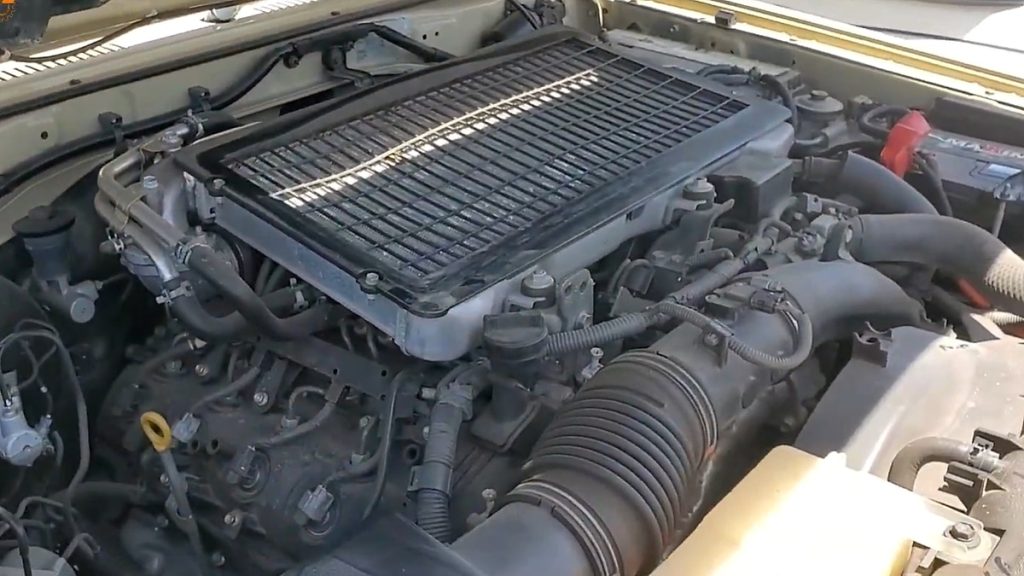
Stock figures are 151kW at 3,400rpm and 430Nm arriving at 1,200rpm. That torque figure sounds healthy until you’ve loaded the tray with a canopy, a full water system, recovery gear, and three weeks of food and fuel. At that point, the V8 feels like it’s pulling a house.
The LandCruiser 79 series is heavy, geared conservatively, and not designed for overtaking maneuvers on undivided highways. Accept this, and it’s fine. Fight it, and you’ll be miserable.
Tuning: what actually works
A Unichip Q4 with a 3.5-inch stainless exhaust significantly changes the engine’s character. A properly mapped tune from a reputable tuner, one focused on exhaust gas temperatures and drivability rather than headline power numbers, turns the 79 from a slug into something you can confidently use on a highway. The keyword is “properly”: a hack tune that chases power at the expense of EGTs will shorten engine life and potentially cook the turbo.
Multiple maps are worth the investment if you’re doing varied work. A sand/dune map that maximizes available power, a tow map that optimizes torque delivery under heavy load, a standard daily map for mixed driving, and a high-idle map for winching or running a compressor. Switching between them takes seconds, and the difference in driving feel is real.
DPF: the thing nobody mentions until it’s too late
Post-2016 79s have a Diesel Particulate Filter. This matters enormously for owners who spend a lot of time idling — running a fridge compressor off the alternator while stationary, crawling through technical off-road terrain, or camping in one spot for several days.
The DPF regenerates by getting hot. If you’re not giving the engine enough sustained highway driving, soot accumulates, and the filter eventually blocks. Warning lights, limp mode, and a workshop bill follow. The fix is preventive: understand your driving patterns, do a conscious highway run every few days during extended trips, and consider a DPF delete if you’re doing predominantly remote, low-speed work (check local regulations before going this route).
The Modifications That Actually Matter

Every LandCruiser 79 Series forum thread eventually becomes a debate about which modifications are essential and which are the product of too much money and too much time on YouTube. After enough kilometers, a clearer picture emerges.
Alternator: do this before anything else
The factory alternator is positioned where it will encounter mud on any serious off-road work. It fails when wet. This is a known issue, not a bad-luck story. A sealed, water-cooled replacement unit is the single modification that will save you from the most embarrassing breakdown scenario: a dead vehicle in the middle of a crossing because the alternator gave up.
GVM upgrade
The stock 3,400kg GVM is theoretical for a properly equipped touring 79. Add a steel tray, a quality alloy canopy, a dual battery system, a water tank, fuel cans, recovery gear, and provisions for a decent trip, and you’re close to or over the limit before a single person sits in the cab.
The 3,780kg upgrade (available through approved engineers in Australia) gives you the legal headroom to carry what you actually need. If you’re running a slide-on camper, this is non-negotiable. Beyond the legal aspect, the suspension re-rating that comes with the GVM upgrade genuinely improves the loaded vehicle’s handling.
TruTracker rear track correction
The 70 Series has a narrower rear track than the front — not by a huge amount, but enough that the rear wheels don’t follow in the same path as the fronts on loose or rutted surfaces. The TruTracker system corrects this. It’s not a glamorous modification, and it doesn’t photograph well, but it genuinely changes how the vehicle tracks through corners and across rough ground, especially when loaded.
Snorkel — the real one
The factory “raised air intake” that Toyota fits is not a snorkel. It is not sealed. It does not provide meaningful protection against dust or water ingestion on deep crossings. A Safari Snorkel Armax, or an equivalent genuine sealed unit, is the replacement. This matters for two reasons: water ingestion during deep crossings (hydrolock is terminal and expensive) and dust ingestion in outback conditions (fine bulldust will destroy an engine over time if it’s bypassing the air filter).
Brakes
A fully loaded LandCruiser 79 Series on its standard brake pads does not stop the way you want it to. Quality aftermarket pads — EBC, Bendix, Hawk, depending on your specific use case — make a measurable difference. If you’re towing as well, consider brake fade resistance in your selection. Upgraded rotors become relevant at higher weights.
Seating
This is the most underrated modification on the list. The factory seats are adequate for short trips and lose meaningful support after a few years of hard use. Long-haul touring, the kind where you’re putting in ten or twelve-hour days across corrugated dirt roads, demands better. Stratos suspension seats are the benchmark recommendation from experienced tourers. They’re not cheap, but they prevent the chronic back issues that have cut short more than a few people’s touring careers.
Sound deadening
Virtually no write-up covers this, but it’s transformative. The LandCruiser 79 Series cab is loud. The V8 diesel at highway speeds, the wind noise, the road roar from all-terrain tires it adds up to genuine fatigue on long days. Dynamat or equivalent applied to the floor, firewall, doors, and rear cab wall significantly takes the edge off. It’s a weekend job, the materials aren’t expensive relative to the rest of the build, and the difference on a 600km highway day is real.
Building the Tray: The Weight Lesson Everyone Learns the Hard Way

The build progression for most 79 owners follows a predictable arc. First tray: heavy steel, built for maximum strength, ends up around 200kg before any gear goes on it. The vehicle handles badly unladen, the rear axle works overtime, and wheel bearings don’t last as long as they should.
Second attempt: move toward alloy. PCOR makes trays in the 80–100kg range that are significantly stronger than most custom steel work. The weight saving is real, and the handling improvement is immediate.
Third phase: question everything happening in the canopy. Most people discover they’re carrying things “just in case” that they’ve never used. The Maxtrax that’s never come off the mount. The second spare tire. The full toolkit, when used as a targeted selection, would cover 95% of scenarios.
The lesson is that weight is the enemy of the 79. It stresses the drivetrain, wears out consumables faster, degrades fuel economy, and makes the vehicle handle like a fully loaded ship in anything other than a straight line. Every kilogram added to the tray is a kilogram working against you.
Rear half-shafts are a known casualty of overloaded touring 79s. They snap. It’s an unpleasant surprise the first time and an irritating inevitability if you keep overloading. Carry a spare shaft on serious trips, and understand that it often tells you something about the overall weight you’re running.
LandCruiser 79 Series GXL vs. Workmate: Which Variant to Buy
GXL
Front and rear factory lockers come standard. This alone makes it the choice for anyone doing technical off-road work — the factory ARB units are well-regarded, and the convenience of diff locks that operate cleanly from the factory is worth the price premium. The GXL also includes power windows, keyless entry, and factory flares. For long-term ownership and resale, it’s the variant that holds value best.
Workmate
The Workmate’s vinyl interior and rubber flooring are genuinely better for a vehicle that spends time in the mud. Easy to hose out, no carpet to harbor moisture and smell, no fabric to stain. If you’re running the vehicle in agricultural or mining applications where it gets regularly dirty, this is a practical advantage.
The absence of factory lockers is the real issue. You can add aftermarket lockers, but it adds cost and complexity, and the factory fitment is cleaner.
For most tourers, the GXL is the right choice. For those using the 79 primarily as a work vehicle that occasionally goes touring, the Workmate makes sense.
The Automatic Gearbox Question (2024 Onward)
The 2024 facelift introduced both a four-cylinder turbo-diesel option and an automatic transmission. The manual V8 remains the choice of existing owners and purists, but the automatic deserves a fair hearing.
The manual requires active engagement: you choose the gear, you decide when to change, and you manage engine braking on descents manually. In technical terrain, this gives experienced drivers precise control. On a 1,200km highway transit with a loaded tray, it becomes tiresome.
The automatic has received genuine praise from drivers who prioritize accessibility and long-distance comfort. For people new to the 70 Series platform, or for those doing more highway and station work than rock crawling, it’s a legitimate option. The four-cylinder is more fuel-efficient but makes less torque than the V8, which matters when fully loaded.
What the Toyota Tax Actually Means
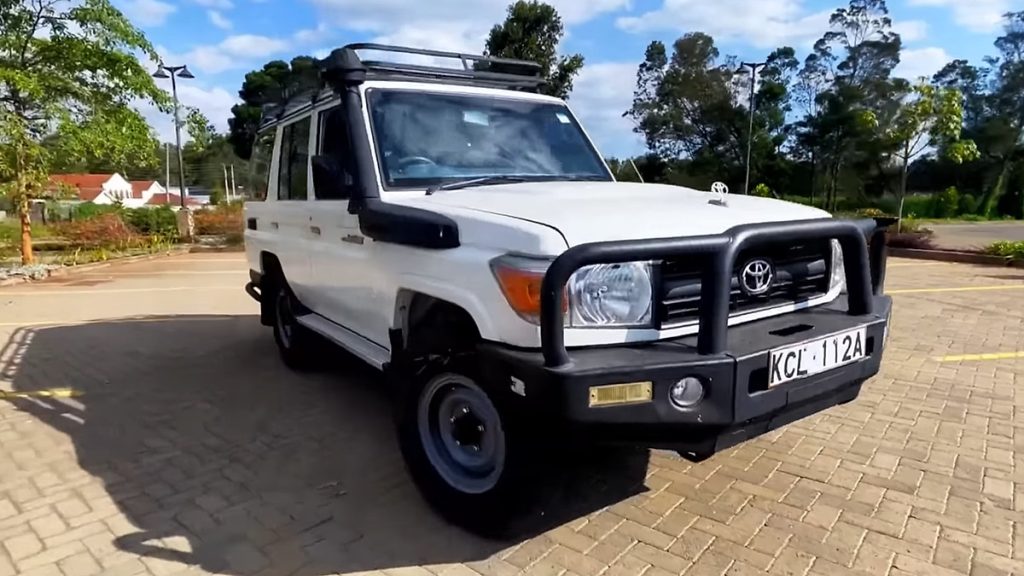
The 79 Series holds its value with a stubbornness that borders on unreasonable. High-kilometer examples in good condition sell for prices that would embarrass equivalent-age competitors. Part of this is the platform’s genuine longevity; 400,000km examples are common, and part of it is market sentiment.
What this means in practice: buying a good used 79 is genuinely worth it, because depreciation is slow and the running costs are manageable if you maintain it properly. But factor in that a base vehicle in stock form is just the starting point. Getting it to a modern touring standard — suspension, tray, canopy, dual battery, water, communications — means spending again. Budget realistically and don’t be surprised by it.
The Honest Verdict
The 79 Series rewards drivers who are willing to be involved. You make the gear selections. You decide when to lock the diffs. You live without the storage, the refinement, and the automated systems that modern SUVs offer as standard. It’s noisier and rougher when unladen, and it turns like a container ship.
In exchange, you get a vehicle that mechanics in outback towns can fix without a laptop, for which parts can be found in places that don’t have a traffic light, and that has a track record of completing journeys that would have defeated something more sophisticated. For remote touring, that record matters more than turning radius.
Build it right, keep the weight in check, address the known weak points before they find you, and the 79 Series will take you further than almost anything else you could buy.