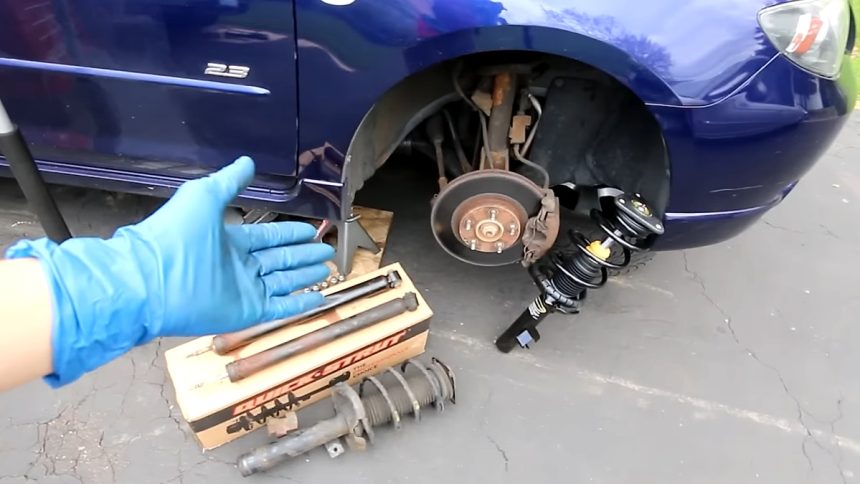
What does a bad strut look like? It’s not obvious, especially for new car owners or inexperienced drivers. Simply put, a bad strut often looks wet and oily, and in some cases, caked in grime, dented, or even showing signs of cracking.
Since your vehicle’s struts are critical to your safety and to keeping the tires firmly planted on the road, spotting these warning signs early can save you from costly repairs and dangerous handling issues.
Bad struts will usually reveal themselves through visible damage, unusual noises, and poor handling characteristics. While it is possible to drive with worn-out struts, doing so can quickly lead to further suspension damage and reduced vehicle control.
Visual Signs of Bad Struts (What You Can See)
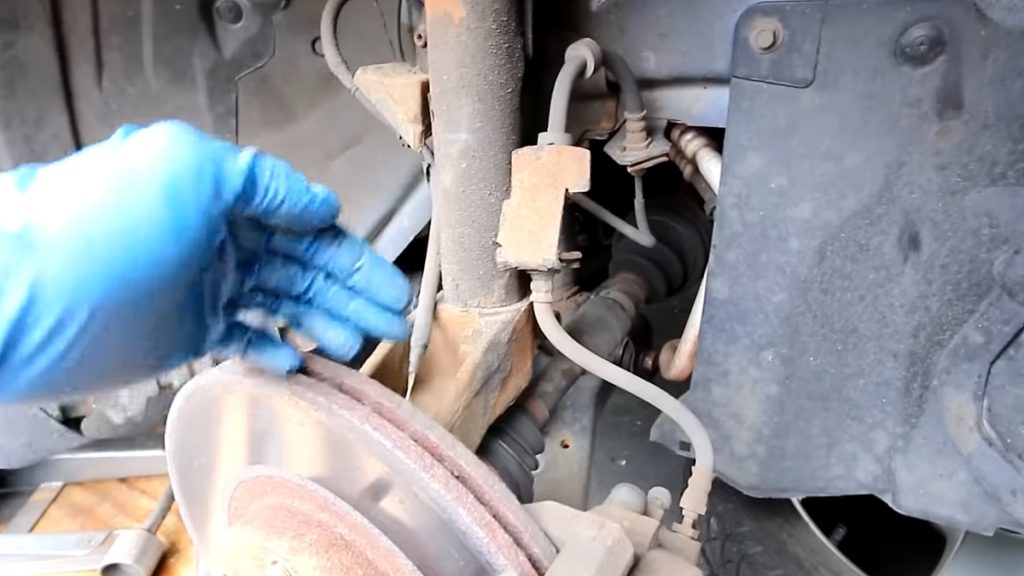
Perhaps one of the easiest ways to identify a worn-out or failing strut is by closely inspecting the suspension assembly and tires.
Fluid Leaks
Struts contain hydraulic fluid that controls the spring movement and absorbs road impact. When the internal seals fail, the fluid begins to leak out. If the strut’s body appears oily, greasy, or covered in wet dirt buildup, it is no longer functioning properly and needs to be replaced immediately.
Uneven Tire Wear (Cupping)
Your vehicle’s suspension is responsible for keeping your vehicle firmly planted while driving down the road. A worn-out strut won’t properly control wheel movement, causing the tire to bounce excessively while driving. This often creates a wavy or scalloped tread pattern known as tire cupping. Sections of your car’s tires may begin to appear hollowed out or unevenly worn.
Physical Damage
The strut is designed to be rugged, but it is often susceptible to road and environmental hazards. Closely inspect the strut body for dents, bending, or severe rust. Structural damage can prevent the internal piston from moving correctly, reducing the suspension’s ability to absorb impacts.
Wornout or Cracked Mounts
Strut mounts use a rubber bushing to isolate vibrations and maintain proper alignment. These bushings at the top and bottom act as insulators. Cracked, separated, or deteriorated mounts can lead to uneven tire wear, steering issues, and suspension noise.
Torn Dust Boot
The metal shaft of the strut is protected by a rubber sleeve called a dust boot or shock boot. This component is designed to keep dirt and debris away from the seals. If the boot is ripped or missing, contaminants can enter the strut assembly, accelerating internal wear.
How a Bad Strut Sounds Like

If you are unable to see the damage on a bad strut, you will almost likely hear or feel it as you drive down the road. These are auditory symptoms.
Clunking and Banging Noises
A bad strut commonly produces a hollow clunking or knocking sound when driving over potholes, rough roads, or bumps. This happens when the strut’s internal components can no longer properly dampen suspension movement, causing the metal parts to collide.
Excessive Bouncing
One of the simplest ways to check if you have bad struts is to push down firmly on one corner of the vehicle (front or rear). A healthy suspension should rebound once and settle immediately. If the vehicle continues bouncing several times, the struts are likely worn out.
Rough Ride Quality
Worn struts will allow excessive weight transfer during braking and cornering. You will notice that the front dips sharply when braking, while the vehicle may lean excessively in turns or sway during lane changes, making the ride quality feel off.
Replace Bad Struts Immediately
Your vehicle’s struts are both suspension components and safety components. Ignoring these symptoms can create a domino effect throughout the suspension system. Additionally, failing struts will place additional stress on other suspension components, including springs, ball joints, steering linkages, and tires, leading to premature wear.
They will also reduce the effectiveness of modern safety systems like ABS and stability control, both of which rely on consistent tire contact with the road. Having bad struts will also reduce your vehicle’s value, especially in the used car market, and will be viewed by potential buyers as a red flag.