
It can be quite frustrating when your Nissan X-Trail Fuel gauge suddenly starts sending erratic readings. If the fuel gauge in your Nissan X-Trail suddenly drops from half a tank to empty, fluctuates while driving, or triggers the low-fuel warning too early, you are not alone.
This is one of the most common faults affecting Nissan X-Trail T30 and T31 models, particularly higher-mileage vehicles built between the early 2000s and early 2010s.
After years of owner reports, workshop repairs, and technician troubleshooting, the issue is now well understood. In most cases, the fault comes from a failing fuel level sender inside the fuel tank, although wiring problems and instrument cluster failures can also cause inaccurate readings.
This guide explains the symptoms, causes, diagnostic process, repair options, and long-term fixes based on real-world workshop experience and known Nissan X-Trail failure patterns.
Why Nissan X-Trail Fuel Gauges Commonly Fail
The Nissan X-Trail fuel gauge system relies on a fuel level sender mounted inside the fuel pump assembly. The sender uses a float arm connected to a variable resistor whose resistance changes as fuel levels rise and fall.
Over time, the internal contact surfaces wear out, especially in vehicles regularly running ethanol-blended fuel. Once corrosion develops on the resistor strip, the gauge starts sending inconsistent signals to the dashboard.
According to owner reports from forums, most failures begin to appear between 80,000 and 120,000 miles, although some vehicles develop symptoms earlier, depending on fuel quality and driving conditions.
Common Symptoms of a Faulty Fuel Sender

One of the most common complaints is the gauge suddenly dropping to empty even when the tank still contains fuel.
“Have had my T30 for 3 months (2005 model). When I fill the tank the fuel gauge does not always go to the full mark. I am used to my previous car where if I filled it to the top, the needle would go to the high side of the full mark and sit there while the fuel in the filler neck was consumed. The X Trail gauge seems erratic (although not flickering) Filling the X Trail to ‘overflow’ sometimes gets the needle on the full line and sometimes slightly below,” an X-Trail (2005 model) owner shared his experience on an online forum.
Some drivers notice the needle fluctuating while driving, while others experience a permanently inaccurate reading that never reflects the actual fuel level.
Another common issue is the low-fuel warning light activating far too early, even when several liters or gallons remain in the tank.
Unlike many modern electronic faults, this issue usually does not trigger a check engine light because the fuel sender communicates directly with the instrument cluster through analog resistance values rather than ECU-monitored digital signals.
How to Tell if the Problem Is the Sender or the Dashboard
Before replacing expensive components, it is important to confirm whether the fault is caused by the sender unit, wiring, or instrument cluster. The most reliable diagnostic method is testing the sender resistance with a multimeter.
On most Nissan X-Trail T30 models, the sender typically reads around 4 to 6 ohms when full, around 80 to 120 ohms when empty, and roughly 43 ohms near quarter-tank.
To test the sender, disconnect the unit and connect a multimeter set to resistance mode across the terminals. Slowly move the float arm through its full range of motion.
A healthy sender produces smooth and steady readings throughout the movement. If the readings jump erratically, cut out intermittently, or fluctuate wildly, the internal resistor contacts are worn out. In many cases, this simple test immediately confirms the fault.
Replacing the Nissan X-Trail Fuel Level Sensor
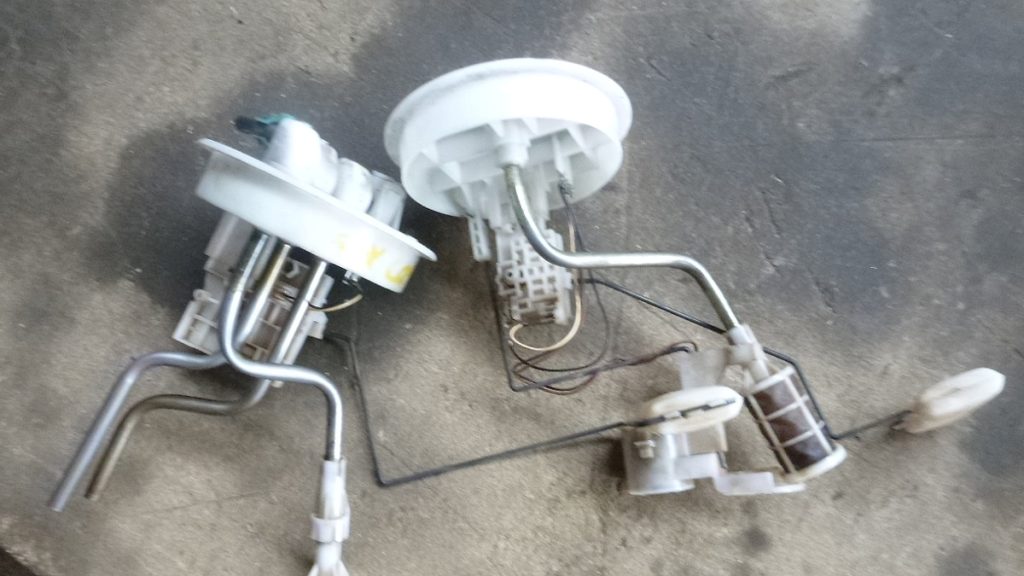
Replacing the fuel level sensor is often far cheaper than replacing the entire fuel pump assembly. Many owners successfully repair the issue by replacing only the sender component.
Step 1
Before starting the repair, disconnect the negative battery terminal and work in a properly ventilated area. Fuel vapors are highly flammable, so avoiding sparks and open flames is essential.
Step 2
Access to the fuel tank is gained by lifting the rear seat cushion and removing the inspection cover. Before opening the tank, clean the surrounding area thoroughly with compressed air or a clean brush. Dirt entering the tank can damage the fuel pump or clog the fuel filter.
Step 3
During removal, pay attention to the orientation of the sealing gasket. Incorrect installation can lead to fuel vapor leaks or pressure issues later. OEM-style sensors such as Nissan part numbers 25060-8H31B and 25060-8H311 generally fit directly into the factory housing without modification.
Step 4
When reinstalling the assembly, avoid overtightening the retaining screws because the nylon housing can crack under excessive torque. After reconnecting the battery, allow the system a few minutes to stabilize before checking the gauge reading.
Instrument Cluster and Wiring Problems

If the sender tests correctly but the gauge remains inaccurate, the next step is to inspect the wiring and instrument cluster.
Older X-Trails are known to develop connector and grounding issues over time. Loose terminal connections can interrupt the signal between the sender and the dashboard, causing sudden drops or unstable readings.
One effective workshop trick is to use a 0.65 mm safety pin to test connector tension. A properly functioning terminal should grip the pin slightly during insertion. If the connector feels loose, the internal contact spring may be damaged.
Wiring insulation should also be inspected carefully. Chafed wires touching the body can short the circuit to ground and cause false fuel readings.
In some cases, the instrument cluster itself develops calibration problems, especially on aging high-mileage vehicles.
Why Genuine Nissan Parts Matter
Fuel sender quality makes a significant difference in long-term reliability. Genuine Nissan sender units use higher-quality plated electrical contacts that resist corrosion from ethanol-blended fuels. Many cheap aftermarket sensors use lower-grade materials that oxidize quickly and develop inaccurate readings within months.
Original parts are usually heavier and feature proper laser-etched identification markings rather than printed labels.
Using poorly calibrated universal sensors can also create inaccurate voltage curves, causing the gauge to display incorrect fuel levels even when the sender is technically functioning. For this repair, genuine or OEM-quality parts are strongly recommended.
Nissan X-Trail Fuel Gauge Repair Costs
Repair costs vary depending on the source of the problem and whether the work is done professionally or at home.
Replacing the complete fuel pump assembly typically costs between $320 and $480, including labor. Replacing only the fuel sender usually reduces costs significantly, with most sensor replacements ranging from $55 to $75 for parts alone.
Professional wiring repairs can also be a cost-effective solution when the issue comes from damaged connectors or broken wiring rather than the sender itself.
Tips to Prevent Future Fuel Gauge Problems
Many experienced X-Trail owners rely on the trip meter as a backup fuel reference, especially on older vehicles. Resetting the trip meter during every fill-up helps prevent unexpected fuel shortages if the gauge becomes unreliable again.
Using high-quality fuel from reputable stations may also reduce contamination buildup on the sender contacts. Most importantly, always inspect and clean grounding points during any fuel system repair. Poor grounds remain one of the leading causes of unstable fuel gauge readings on aging Nissan X-Trails.