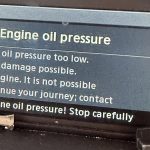
Buying a used car is supposed to save money, not leave an owner staring at a $15,000 repair bill. But that is exactly what happened to one 2018 Hyundai Kona owner who shared the story online after the engine failed less than a year after purchase. Hyundai’s warranty did not apply because the buyer was the second owner, and a third-party warranty company blamed carbon buildup and denied the engine-replacement claim. The owner now says the vehicle is a “$15,000 paper weight.”
The story also serves as a warning for used-car buyers. Researching recalls, common engine failures, warranty limitations, and owner complaints beforehand can save thousands of dollars.
Recently, the owner shared the following story on the HyundaiKonaForum subreddit:
“We’re not covered by Hyundai because we’re the 2nd owner. The dealer took the whole engine apart so it could be inspected by a 3rd party warranty company. The replacement engine is denied because of carbon buildup. We just bought the car used in June of 2025. Now I got a giant $15,000 hole in my pocket, and no car to drive.”
This appears to be a classic case of someone unknowingly buying another person’s problem. The buyer likely thought they were purchasing an affordable compact SUV, only to discover underlying engine issues after the sale. Because the vehicle was bought used, Hyundai would not fully back the repair, while the third-party warranty company found grounds to deny coverage.
The vehicle reportedly had 88,000 miles at purchase and now has 94,000 miles. According to the owner, the problems began just six months after buying the SUV.
“2018 started at 88,000 miles; it’s now at 94,000 miles, but the problem started 6 months after we bought it. We haven’t even had the car a year.” He confessed.
2018 Hyundai Kona Known Engine Issues

The 2018 Hyundai Kona owner is now facing a massive repair bill without a usable vehicle. Unfortunately, complaints involving Hyundai engines are not new.
“I would have avoided these cars like the plague… this is an ongoing issue they’ve been having for over a decade.”One commenter wrote.
While the comment may sound harsh, the concerns are valid. The 2018 Hyundai Kona has documented engine issues, particularly involving the 2.0-liter engine. Reported problems include excessive oil consumption, knocking, stalling, catastrophic engine failure, and, in some cases, engine fires. Some failures have reportedly occurred in vehicles with fewer than 70,000 miles.
Despite these issues, the Hyundai Kona remains one of Hyundai’s most successful compact SUVs thanks to its nimble handling, smooth transmission, and practical design.
However, in October 2021, the National Highway Traffic Safety Administration issued a recall for Hyundai Kona models equipped with 2.0-liter “Nu” MPI engines sold in the United States and Canada. According to Recall 203, faulty piston oil rings could lead to excessive oil consumption, engine knocking, stalling, and possible engine damage or fire risk. More than 125,000 Kona and Veloster models were reportedly affected.
The Warranty Trap Many Used-Car Buyers Miss
Hyundai’s 10-year/100,000-mile powertrain warranty mainly applies to original owners. Second owners typically receive reduced coverage, limited to 5 years or 60,000 miles.
Because this Kona already had 94,000 miles, Hyundai was not obligated to replace the engine.
One commenter advised the owner to seek legal action, “Lawyer up! Hyundai knows this is an issue with their engines.”
Unfortunately, the carbon buildup discovered during the inspection may complicate any claim. Manufacturers and warranty companies often classify carbon buildup or sludge as neglect, making it easier to deny expensive repairs like engine replacements.
What Buyers Should Check Before Purchasing a Used Kona

Anyone considering a used 2018 Hyundai Kona should:
- Browse owner forums and complaint boards
- Request complete service records
- Conduct an independent pre-purchase inspection
- Check for recalls using the NHTSA VIN Lookup Tool or the Hyundai recall portal
Spending a few hundred dollars on an inspection can prevent repair bills worth thousands later.
The biggest lesson from this $15,000 “paper weight” is simple: a cheap used car can quickly become an expensive mistake if buyers skip proper research.