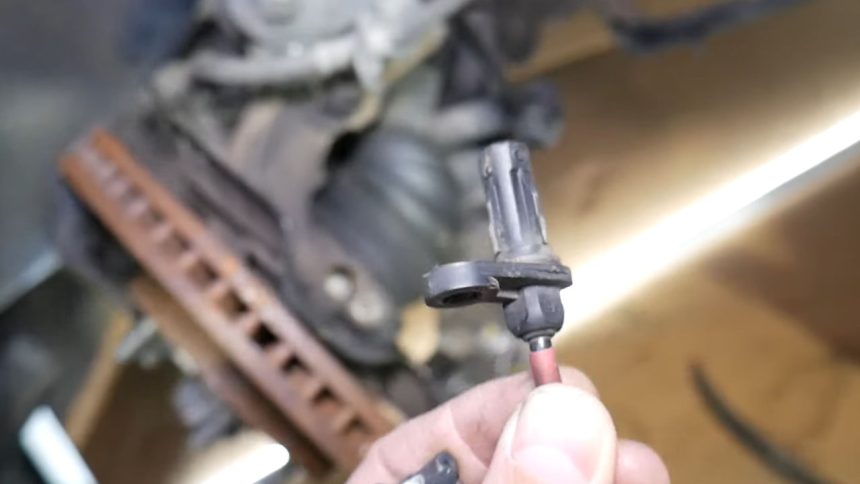
It’s not every day that your wheel speed sensor will fail. But when it does, it disables your vehicle’s critical safety features, such as Anti-lock Braking System (ABS), traction control (TCS), and stability control (ESC) – which can pose a significant safety risk while driving. The most common symptom is an illuminated ABS warning light on your car’s dashboard.
You might be wondering how your speed sensor is connected to your vehicle’s critical safety features. Well, it is because your vehicle’s computer loses data on the wheel with a faulty speed sensor. As such, you might experience common symptoms such as vibrating or pulsating pedals when you press on the brakes, and you’ll also notice reduced vehicle stability and inconsistent braking. On rare occasions, the vehicle’s speedometer will not work.
So, what are the telltale signs your wheel speed sensor is faulty? The first sign is that your ABS and traction control lights will pop up on your dashboard, and, depending on your vehicle’s make and model, the check engine light may also be triggered. According to one owner on a popular automotive subreddit on Reddit, there’s usually a warning light when the wheel speed sensor goes bad, and you might notice random firing of the ABS during curves and even mini lock-ups when you stop at a red light.
What causes wheel speed sensor failure?

There are a host of factors that can lead to wheel speed sensor failure, including mechanical, environmental, and electrical. However, the most obvious is age. Over time, the magnetic elements in the sensor weaken and can’t accurately or consistently measure wheel speed, leading to failure. Your vehicle’s wheel speed sensor may also fail due to debris or contamination, especially during extreme weather, such as winter, or while driving in salty environments.
Road debris can also affect the wheel speed sensor, damaging the wiring harness or corroding the sensors, thereby disrupting data flow. Moisture in the wheel area can also lead to corrosion, affecting the sensor wiring connections. While not common, physical damage to the tone ring (reluctor wheel) from improper handling after replacement can also lead to failure, as the sensor can’t transmit data from the wheel.
Additionally, car owners in environments with salt, dirt, or moisture are more likely to experience issues with wheel speed sensors, which can shorten their lifespan.
Symptoms of a failing wheel speed sensor

When the wheel speed sensor fails, your vehicle will exhibit several symptoms – the most common is the illumination of warning lights, often including the ABS and Traction Control lights. The driver will also notice the ABS engaging unexpectedly and, in some cases, failing to engage at all during hard braking.
While driving down the road, the vehicle’s speedometer might drop to zero intermittently, and there will also be longer stopping distances on slippery surfaces. Since the speed sensor is faulty, the automatic transmission won’t be able to shift properly due to a data loss, and will shift gears oddly. This is because the vehicle’s PCM (Powertrain Control Module) receives incorrect wheel-speed data and, in response, shifts gears erratically, late, or harshly. If the check engine light is illuminated, the vehicle may enter limp mode. Driver-assist features such as hill climb assist or adaptive cruise control will also cease to function.
Several car owners on Reddit agree that intermittent warning lights often appear weeks before the ABS system entirely stops working – this is an early warning that the sensor is slowly failing.
DIY checks – how to test a wheel speed sensor yourself
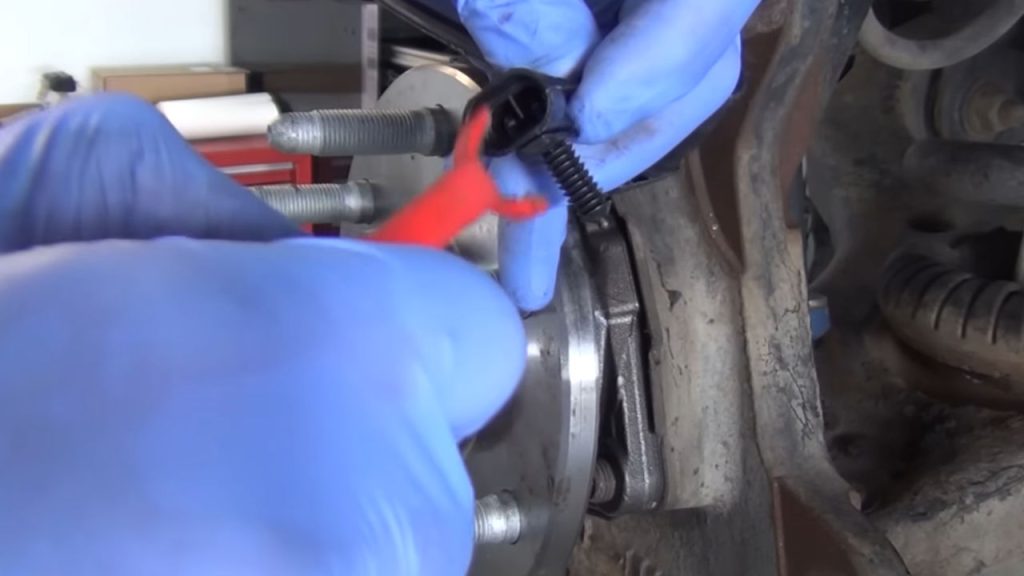
Checking whether your wheel speed sensor is faulty or working correctly can be a tiresome task, especially in a normal vehicle with four wheels. However, you don’t need the expertise of a mechanic or your local repair shop to know if your wheel speed sensor is faulty.
Surprisingly, you can perform this task from the safety of your home, garage, or driveway. All you need for this task is a multimeter (with ohms and AC voltage settings), a jack and jack stands, and a basic wrench/socket set (in case you need to remove the wheels).
For starters, you’ll need to locate the wheel speed sensor – it’s usually behind each wheel, near the brake rotor, or at the wheel access point. If you are having difficulty locating the sensor, follow the wiring harness behind the wheel.
Next, to access and disconnect the sensor, you’ll need to safely lift the vehicle and secure it with jack stands. Find the sensor’s electric connector and disconnect it.
Also, make sure to check the ABS/traction control fuses to rule out the simple issues. With the multimeter, perform a resistance test. Firstly, set the multimeter to ohms, and connect the probes to the sensor’s pins. If you get a high or no reading on the multimeter, the sensor is bad. Compare both sides of the pin; the readings need to be close (within 1%).
To perform an AC voltage test (passive sensors), switch the multimeter to AC voltage (VAC). Next, spin the wheel hub manually, and read the screen. The voltage should change with speed.
In case there is no change, the wheel speed sensor is faulty.
You can also visually inspect the sensor, looking for dirt, corrosion, cracks, or damage on the sensor and the tone ring. If you own an OBD-II scanner with ABS live data, it can help identify which sensor has incorrect readings, simplifying the testing process.
When to see a mechanic

Not every car owner has the time, patience, skill, or space to physically check simple faults like a wheel speed sensor—and that is okay. However, if you experience multiple warning lights on your vehicle’s dashboard for ABS, TCS, and ESC, it might be time to check in with your nearest repair shop.
If you’ve done the above tests with your multimeter and discovered that there is no resistance or inconsistent voltage from the readings, then it might be the right time to replace your vehicle’s wheel speed sensor. Also, if you discover your ABS engaging incorrectly or braking feels off, it’s best to have your vehicle checked by a qualified mechanic.
A professional repair shop or mechanic will use a scan tool or oscilloscope to aid in sensor diagnosis, resulting in much more accurate readings.
Estimated repair cost
According to vehicle owners on popular car forums like Reddit, replacing wheel speed sensors is fairly easy and costs between $25 and $100, depending on the sensor. As such, the average cost of a DIY replacement will range from $60 to $150, depending on the vehicle’s make and model.
Professional replacement will be a bit costlier, factoring in a diagnostic fee of about $50 and parts and labor of about $300 (total $350).
The costs of repair will vary by vehicle make and by the location of the wheel speed sensor (front vs. rear). A rule of thumb for replacing your vehicle’s wheel speed sensor is to do it in pairs for balance.
FAQ section
1. Can you drive with a bad wheel speed sensor?
It is possible to drive with a faulty speed sensor, but it is also unsafe since both the ABS and traction control won’t work properly.
2. Will a bad sensor turn off ABS and traction control?
Yes. The control module will disable the safety features when the vehicle’s PCM can’t reliably read the sensor data.
3. Will cleaning the sensor fix the problem?
Depending on the fault, yes. Especially if it was caused by dirt or rust buildup.
4. How long should a wheel speed sensor last?
Experts advise replacing the wheel speed sensors between 30,000 and 50,000 miles. However, exposure to harsh environments, such as winter and salt, can shorten their lifespan.
5. Will a bad wheel sensor affect fuel consumption?
Indirectly, yes – due to potential shifting issues or inactive cruise control.