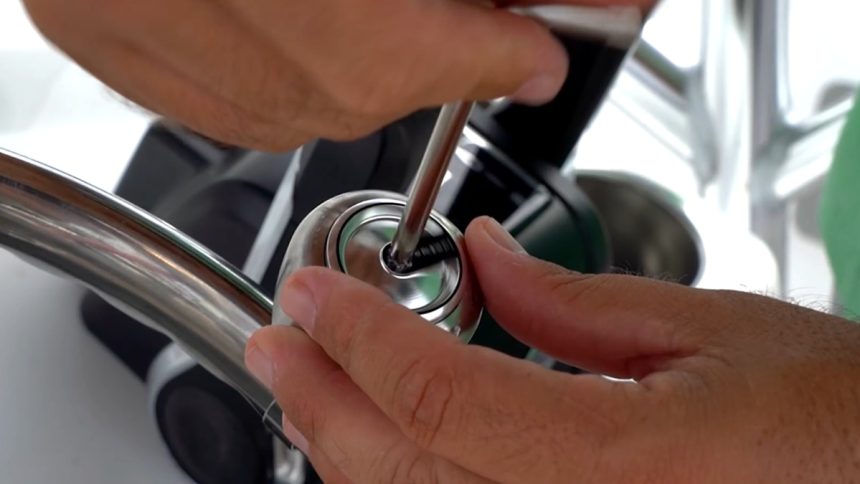
For many UK Boaters and maritime enthusiasts, long days navigating a boat or marine vessel can have a surprising toll on the body. Even though boating is a passion, the physical reality of maintaining control at the helm, which often involves constant micro-adjustments, can strain the wrists, shoulders, and lower back.
As a result, one of the most effective, yet often debated (among maritime enthusiast circles) upgrades a mariner can make is the installation of a marine steering wheel knob. The steering wheel knob, also known as a spinner, ‘brodie knob’, power handle, or the notorious ‘suicide knob’, is a compact, ergonomic attachment that offers significant benefits in marine applications by enhancing safety and ease of operation.
In this guide, we will do a deep dive into why these tools are becoming essential for UK marine vessel users, the technical superiority of stainless steel construction, and the regulatory landscape for British waters.
The Practical Advantages of Steering Wheel Knobs in Marine Environments
Due to its design, size, and shiny exterior, it’s easy to assume a boat steering wheel knob is merely an aesthetic accessory. But the truth is, a maritime wheel knob is a specialized tool that provides a single point of contact for turning the helm, enabling smoother, faster, and more controlled steering, particularly during low-speed operations or in confined spaces.
Effortless Maneuvering and Docking
When navigating through UK marinas or narrow channels, precision is important. A steering knob enables a “flick of the wrist” for rapid corrections, transforming broad sweeping motions into easy, fine-tuned inputs.
When behind the helm of faster boats like center consoles or sport fishers, the steering wheel knob allows the operator to counteract lateral drift or wave action with a single 30-degree twist, significantly reducing the chances of oversteer.
While docking, the spinner knob allows a skipper to turn the wheel quickly with one hand, freeing the other for throttles, gear levers, or mooring lines. This enhanced dexterity prevents costly bumps, making docking less stressful and more efficient.
Enhanced Leverage and Torque
The main function of a steering wheel knob is to offer the operator a fixed point of leverage on the wheel’s rim. This allows for one-handed operation, which is crucial while navigating marine environments. Unlike wheeled land vessels, where the hand is primarily used for navigation, and one-handed operation is frowned upon, on water vessels, the other hand is often occupied managing throttle controls, checking GPS waypoints, or handling mooring lines.
Therefore, by acting as a lever point, the knob allows for 45-degree hand movements to translate into significant rudder movement, depending on the helm’s gear ratio. This is quite beneficial for high-ratio steering systems that require multiple rotations to achieve a full turn.
Reduced Fatigue on Long Voyages
It’s easy to overlook how the motion of water puts strain on the body, especially on longer voyages. Even while seated, marine enthusiasts use their muscles to maintain balance. The hours spent at the helm can, over time, lead to strain injuries to the arm and hand and, worse, cause mental fatigue.
An ergonomically designed steering knob reduces physical effort by minimizing the jerky hand-over-hand motion required with standard wheels. This, in turn, allows for a more relaxed grip, smoother rotation, and less strain, enhancing alertness, comfort, and visibility, all of which are crucial for safe navigation.
Why Material Matters: Stainless Steel is Paramount for Marine Use
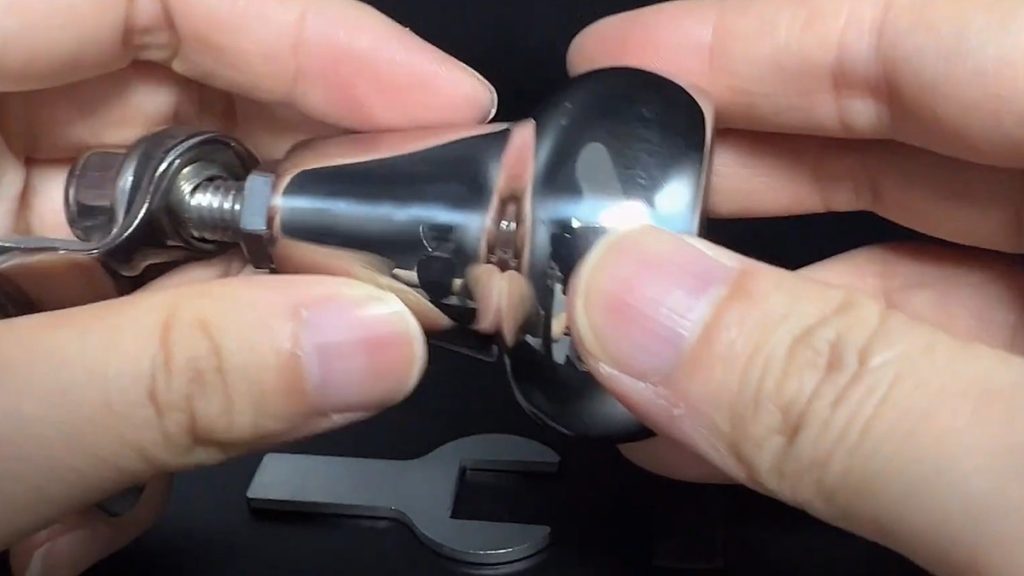
When choosing boat or maritime vessel hardware, the choice of material is the difference between a lifetime investment and a dangerous failure. Unlike automotive steering wheel knobs, marine steering wheel knobs face a harsh, corrosive environment. Saltwater, UV radiation, and moisture quickly degrade inferior materials such as plastic, brass, and aluminum, leading to rust and structural failure under the unique stresses of the marine environment.
The Superiority of Marine-Grade Stainless Steel
Marine steering systems are subject to constant oscillation and engine vibration, particularly when driving at high speeds or in choppy coastal waters. Cheap plastic models are prone to cracking under pressure or warping in direct sunlight. High-quality stainless steel, on the other hand, features a high tensile strength that’s required to withstand cracking or deforming under stress. Based on tests, it’s been proven that even under high continuous vibration (10 Hz for 24 hours), a properly torqued stainless steel knob remains stable and intact.
Environmental Resilience
Unlike automotive vessels, boats are exposed to salt spray and high UV radiation. Materials like brass often begin to degrade within months, while aluminum can oxidize in less than a month. High-grade stainless steel resists these corrosive elements, ensuring the knob’s surface remains smooth and its internal bearing spins freely for years.
Industry-standard Stainless Steel for Boats and Maritime Vessel Components
For marine components, 316-grade stainless steel is the industry standard for steering wheel knobs. This alloy contains molybdenum, offering exceptional corrosion resistance, especially in saltwater. Other grades, like 304 stainless steel, will eventually rust in marine environments.
Key benefits of 316-grade stainless steel for marine steering wheel knobs include;
Corrosion Resistance: The defining feature of 316-grade stainless steel is the molybdenum content. This addition offers unrivaled protection against rust and saltwater corrosion (the primary causes of failure in saltwater environments), ensuring longevity and reliable performance.
Durability: Compared to 304-grade stainless steel common in general hardware (which shows signs of pitting within 6 to 12 months in marine conditions), the high strength and resilience of 316-grade stainless steel typically provide up to 5 years of service, withstanding the rigors of marine use and constant handling.
Aesthetic Appeal: A polished stainless steel finish provides a clean, professional look that complements most marine dashboards and helm stations.
Low Maintenance: A 316-grade knob retains its luster even after repeated exposure to seawater and requires no specialized protective coating or polishing. All you need to do for maintenance is clean with a mild detergent.
High Tensile Strength: 316-grade stainless steel has a tensile strength of approximately 750 MPa, which exceeds that of brass (350 MPa) or Aluminium (150 MPa). This ensures the steering wheel knob can handle extreme maneuvers, including sharp 30-degree/second turns, without failure.
Note: Always verify genuine marine-grade 316 stainless steel construction for steering wheel knobs to ensure durability in harsh marine environments.
UK Marine Regulations: No Specific Prohibition
For boaters in the United Kingdom, understanding the legal and safety requirements for aftermarket equipment is essential for compliance and maintaining insurance coverage.
Following the UK’s exit from the EU, the regulatory framework for marine equipment has shifted. The UK Mark of Conformity for marine equipment, the “Red Ensign’ became mandatory on 1 January 2023. This mark replaces the European ‘Wheel Mark’ for equipment placed on board UK vessels. However, while the Merchant Shipping (Marine Equipment) regulations 2025 seek to clarify these standards, any new equipment should carry the Red Ensign to ensure it meets the UK’s commitment to safety at sea.
Safety and Obstruction Rules
In the UK, while road vehicle steering knob use is regulated (primarily for accessibility or fleet applications under DVSA rules), there is no specific prohibition or regulation for private boats or marine vessels. However, the Maritime and Coastguard Agency (MCA) emphasizes that controls must remain “readily accessible and operable without undue effort.”
The key compliance tips include:
Avoiding Obstruction: Ensure that the steering wheel knob does not interfere with the throttle lever, VHF radio buttons, horn, or engine kill lanyard.
Low Profile Designs: Only choose flush-mounted or low-profile knobs to minimize the risk of clothing entanglement (e.g., a loose sleeve or watch strap) during quick turns.
Insurance Considerations: Even though steering knobs are generally legal, improper placement that results in an accident may be deemed negligent by insurance providers. Keeping records of professional installation can help prove the modification improved safety rather than compromised it during claims.
Installation on Helm Wheels: A Straightforward Process
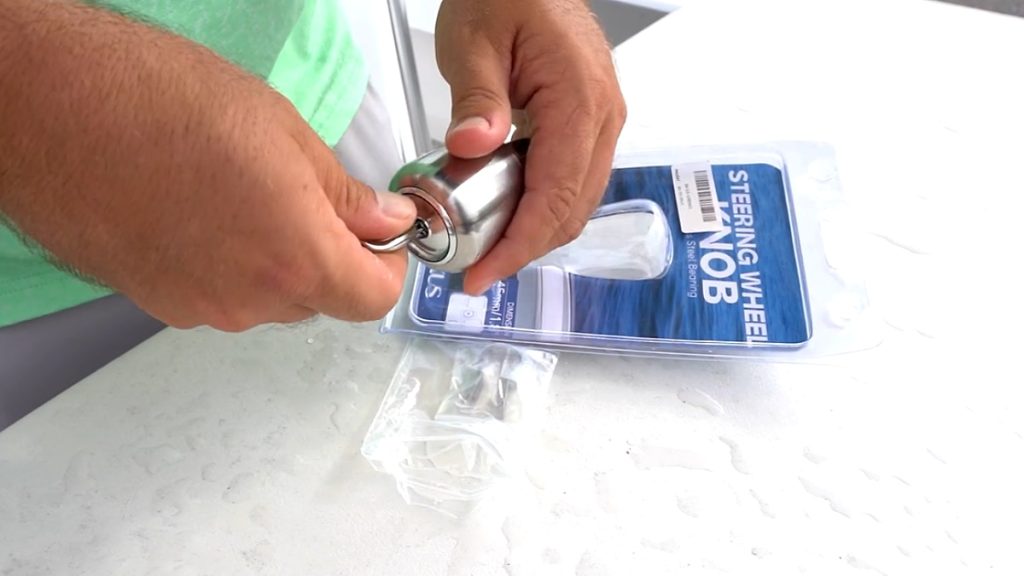
Installing a steering wheel knob on a boat’s helm wheel is generally straightforward but requires careful attention for security and functionality. Most marine knobs are designed to fit a wide range of wheel rim diameters.
Step 1: Precise Measurement
Don’t assume that your boat’s steering wheel shaft or hub is a “universal” size. Use a digital caliper to measure the exact diameter of the hub or shaft where the knob will be fitted. Most fast boats use 1.5” to 2” hubs, while larger yachts may go up to 2.5”.
Step 2: Verify Compatibility
Check the material for your current wheel. For instance, if you have a fiberglass-reinforced plastic (FRP) wheel, be careful not to overtighten the clamp, as it may cause hairline cracks. Only pick knobs with heat-resistant silicone or TPE linings (rated above 180°F) to prevent the knob from slipping or melting on sun-exposed wheels.
Step 3: Determining Positioning
The most effective position for a steering wheel knob is at the 10 o’clock or 2 o’clock position. This ensures it’s within easy reach, offering a natural leverage that doesn’t obstruct the view of the helm gauges and instruments panel.
Step 4: Surface Protection
Clean the helm wheel thoroughly. A rule of thumb is to always include anti-slip silicone or rubber pads between the clamp and the wheel. This prevents the metal clamp from scratching the wheel’s finish and ensures a secure, vibration-proof grip.
Step 5: Securing the Attachment
Most knobs attach via a two-piece clamp. Position the clamp around the wheel rim and tighten it securely with the provided tools for a firm, non-slip fit. Ensure they are tightened to the manufacturer’s specifications, typically around 15 lb-ft, to prevent loosening under engine vibration.
Step 6: Stability Test
After installation, thoroughly test the knob for security and practice steering in a safe, open water area before critical use. It should have zero wobble or rotation on the wheel rim. If any movement is detected, the clamp must be readjusted or replaced with a different sizing shim.
For optimal performance, consider professional installation (if unsure or if your helm wheel is unique). Always follow the manufacturer’s instructions.
A Valuable Addition for UK Boaters
Steering wheel knobs offer a significant upgrade for UK mariners, simplifying docking, reducing fatigue, and enhancing control. While no specific UK marine prohibitions exist, safe operation and the use of marine-grade materials, especially 316 stainless steel, are essential.
Whether you are docking a cruiser in a crowded marina or navigating a performance boat through coastal chop, a high-quality, properly installed knob provides improved control, comfort, and confidence at sea, making it a worthwhile investment for optimizing vessel handling.