If you own a C5 or C6 Corvette with an LS1, LS2, or LS3 engine, you may have noticed a rhythmic “chirp” from the engine bay or a visible shimmy on the front of your engine. This is the infamous Corvette harmonic balancer wobble, a common issue that, if ignored, can lead to catastrophic engine failure.
The harmonic balancer, also known as the crank pulley or vibration damper, is a critical component mounted to the front of your engine’s crankshaft. Its primary job is to absorb and neutralize the tiny torsional vibrations that travel through the crankshaft every time a cylinder fires. Without this protection, your engine components would wear out significantly faster.
On older Corvettes, especially higher-mileage C5 and C6 models, the balancer can begin separating internally. Once that happens, the pulley no longer spins true and starts wobbling or “walking” side to side.
Why a Harmonic Balancer Wobbles
The most common cause of a Corvette harmonic balancer wobble is deterioration of the rubber isolator inside the balancer itself. The component is made up of an inner hub and an outer ring bonded together by a thick layer of rubber. Over time, constant heat cycles, engine vibrations, and age cause the rubber to crack, harden, or separate. Once this bond weakens, the outer ring can begin spinning unevenly, creating the characteristic wobble.
“A more common problem from the ’05’s right on up to the ’13’s is the unit separating, the outer part separates from the center part. They’re held together by a rubber elastomer that dries and cracks, you eventually get a wobble and chirping and you know it’s time to replace the HB,” a 2005 Corvette owner, on the Corvette Forum, disclosed.
Improper installation can also cause the balancer to spin off-center. If the balancer was forced on with a hammer instead of being properly pressed into place, or if it was not seated correctly on the crankshaft, it may never rotate perfectly true.
In more serious cases, damage to the crankshaft snout itself may be responsible. A bent crankshaft, worn keyway, or damaged threads can prevent the harmonic balancer from sitting completely flush, causing visible movement while the engine runs.
What a Wobbling Harmonic Balancer Looks Like
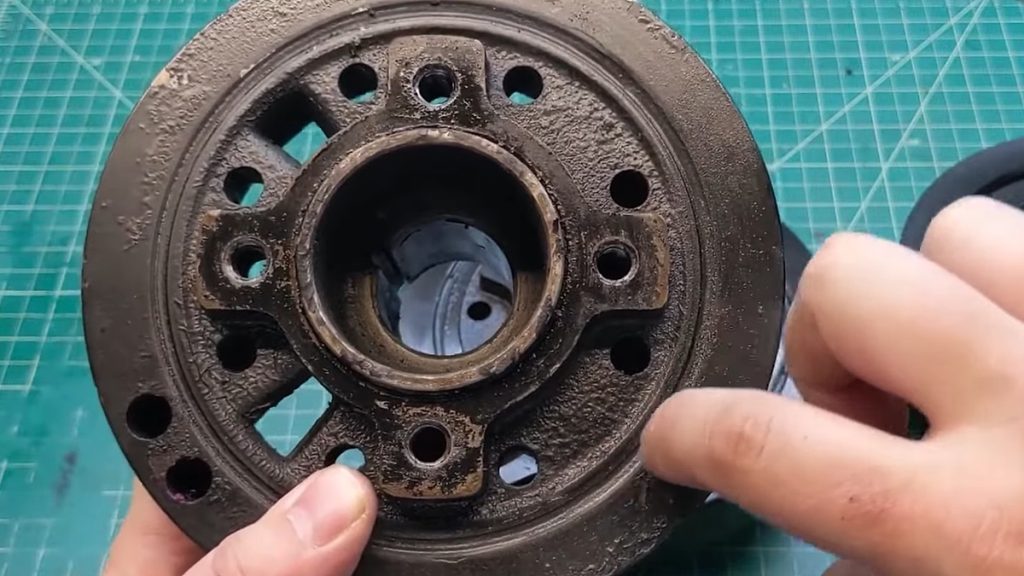
A healthy Corvette harmonic balancer should spin perfectly straight with no side-to-side movement. When it begins failing, the outer ring starts oscillating due to deterioration of the internal rubber isolator.
Many Corvette owners first notice the issue while the car is idling. Looking into the engine bay, the crank pulley may appear to wobble slightly while the serpentine belt shakes unnaturally. In more advanced cases, the balancer visibly moves in and out or appears off-center compared to the rest of the accessory drive system.
Sometimes the Corvette harmonic balancer wobble becomes less noticeable under throttle, leading many owners to temporarily ignore the problem. However, once separation begins, the issue only gets worse over time.
Common Symptoms of a Bad Harmonic Balancer

Because the harmonic balancer drives the serpentine belt system, failure can affect multiple engine accessories at once.
Chirping or Squealing Belt Noise
One of the most common symptoms is a rhythmic chirping or squealing sound from the front of the engine. Many owners mistakenly replace the serpentine belt or tensioner first, only for the noise to return days later.
Visible Pulley Wobble
A crank pulley moving side to side while the engine runs is a major warning sign. Even slight movement usually indicates internal separation has already started.
Engine Vibrations at Idle
You may feel unusual vibrations through the steering wheel, dashboard, or seat while stopped at a light. The LS engine naturally produces vibrations, but a failing balancer amplifies them significantly.
Metallic Knocking or Rattling
As the outer ring loosens further, some drivers report hearing rattling, clunking, or metallic knocking sounds from the front of the engine.
Oil Leaks Around the Crank Seal
A wobbling balancer can damage the front crankshaft seal, leading to oil leaks near the lower front of the engine.
Battery Charging or Steering Problems
If the balancer throws the serpentine belt completely, the alternator, water pump, and power steering system stop functioning immediately. This can leave you stranded within minutes.
Why C5 and C6 Corvettes Develop Harmonic Balancer Problems
The LS engine family is legendary for reliability and performance, but the harmonic balancer is considered a wear item on aging cars.
The balancer consists of two metal sections connected by a thick rubber isolator. Over time, that rubber deteriorates due to heat cycles, engine vibrations, oil contamination, age, aggressive driving, and high RPM use.
Once the rubber bond weakens, the heavy outer ring begins to slip or separate from the inner hub. This issue is especially common on C5 Corvette LS1 models, early C6 LS2 Corvettes, and higher-mileage LS3 cars.
Cars exposed to track driving, frequent hard acceleration, or long-term oil leaks tend to develop the problem sooner.
Is it Safe to Drive with a Wobbling Harmonic Balancer?
The answer is no. Driving with a failing harmonic balancer is risky and can quickly lead to far more expensive repairs.
As the balancer separates, it can throw the serpentine belt, damage the crankshaft snout, destroy the front crank seal, and even cause the engine to overheat. In some cases, the car may suddenly lose power steering and battery charging, while continued vibration can also accelerate crankshaft bearing wear and internal engine damage.
In extreme cases, the outer ring can completely separate from the pulley assembly. Some Corvette owners continue driving for weeks after noticing the wobble, but the longer the issue is ignored, the greater the risk of engine damage.
How Mechanics Diagnose Harmonic Balancer Failure
Diagnosing a Corvette harmonic balancer wobble is usually straightforward once the symptoms become visible. In most cases, mechanics begin with a visual inspection of the crank pulley while the engine is running. They look for side-to-side wobbling, cracked rubber around the balancer, or visible separation between the inner hub and outer ring.
A failing harmonic balancer can also affect the serpentine belt’s alignment. Mechanics often check whether the belt runs smoothly across the pulleys or if it shifts unevenly while spinning. Excessive belt movement is a common sign that the balancer is no longer spinning true.
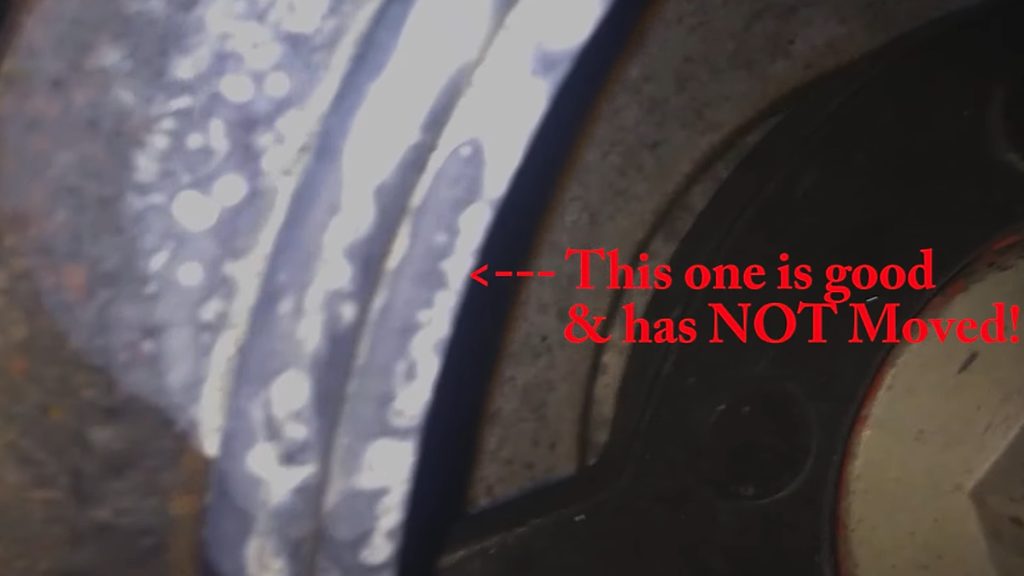
Technicians may also closely monitor the crankshaft bolt while the engine is running. If the crankshaft bolt remains centered but the outer pulley wobbles, the harmonic balancer itself is usually the source of the problem rather than the crankshaft.
Another common diagnostic method involves checking the timing marks on the balancer. If the outer ring has slipped due to internal rubber separation, the timing marks may no longer align, indicating that the balancer has failed internally.
Corvette Harmonic Balancer Replacement Cost
The cost of replacing a Corvette harmonic balancer varies with the Corvette generation, the replacement part used, and local labor rates. In most cases, Corvette owners can expect to spend between $500 and $1,200 or more for the complete repair.
“Had this done on my C5 in October and had the new one pinned to the crankshaft for $1100 incl parts and labor.” a C5 owner responded to a Reddit post asking about full replacement costs.
The harmonic balancer itself typically costs between $150 and $500, depending on whether you choose an OEM replacement or an aftermarket performance unit. Labor is often the more expensive portion of the job, ranging from roughly $300 to $800, because accessing and removing the balancer on LS-powered Corvettes can be time-consuming.
Many Corvette owners choose to upgrade to aftermarket performance balancers from brands like ATI or Fluidampr, especially if the car is frequently driven hard, modified, or used on track days. While OEM balancers work well for stock applications, upgraded dampers are often preferred for their improved durability and long-term vibration control.
Signs the Harmonic Balancer is Separating

If your Corvette shows signs of harmonic balancer separation, address the issue immediately to prevent further engine damage. One of the clearest warning signs is rubber bulging outward from the balancer, which indicates the internal isolator is breaking down. You may also notice the outer ring sitting off-center or wobbling noticeably while the engine runs.
Other common symptoms include excessive serpentine belt movement, chirping noises that gradually grow louder, and metallic rattling from the crank pulley area. In some cases, oil may begin leaking near the front crankshaft seal due to the balancer’s unstable movement.
A wobbling harmonic balancer is far more than a minor annoyance on LS-powered Corvettes. If ignored, the problem can eventually damage the crankshaft, destroy the accessory drive system, or even lead to catastrophic engine failure. Catching the issue early can save thousands of dollars in repair costs and prevent much more extensive engine damage later on.