Here’s the truth: the automotive world will never get tired of classic American cars running big power. In a recent video, Doug from the AutotopiaLA YouTube channel reviewed a Coke Bottle LSX 1969 Chevy Chevelle running 650 HP.
This isn’t your ‘Coke Bottle’ Chevelle, but a professionally, fully custom-built, frame-off restored, pro-touring muscle car by Restomods that packs a 466ci LSX engine. This pro-touring muscle car originally belonged to Steve Aguilar before it was acquired by the automotive tuning outfit.
Aguilar bought this car pretty much finished at a Mecum Auction, under the care of New England Muscle Cars, who did the first iteration of the car and are even responsible for putting it on the Roadster Chassis it currently runs on.
This LSX 1969 Chevy Chevelle runs a built 466ci LSX engine making 650HP
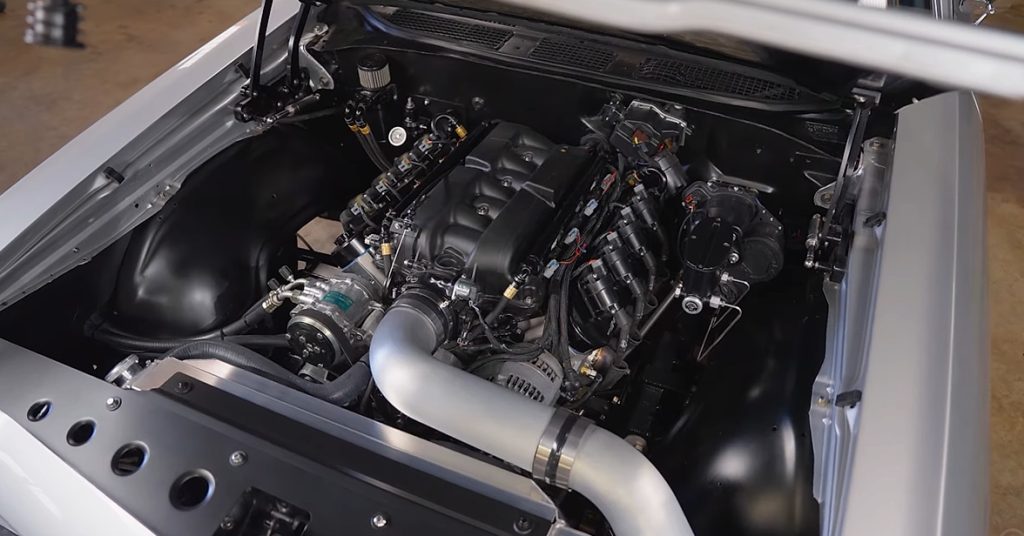
It has a unique silver glimmer that New England Muscle cars say was inspired by modern Mazda. This ripper runs on a built 466ci LSX engine with all-forged internals, including a Callies Precision forged crankshaft, forged rods, and pistons. This muscle car runs on 11:1 compression. It also features an MSD intake manifold and a Holley electric setup, including the ECU.
While this LSX 1969 Chevy Chevelle has never been dyno’d, the tuner says the combo under the hood is good for 650 HP. This is the perfect sweet spot for muscle cars.
4L80-E Transmission and 9-inch limited-slip differential
To harness all the power, this LSX 1969 Chevy Chevelle runs a 4L80-E transmission with full aftermarket case and internals capable of handling up to 1,000 HP. It also featured a 9-inch Ford rear-end limited-slip differential.
“The chassis just sets the tone for these cars. It just feels so smooth. The steering, everything is a level up from a stock A-body chassis. “
The tuners went an extra level to ensure that this custom-built LSX 1969 Chevy Chevelle isn’t too rowdy in terms of the exhaust. They wanted a more driver-oriented tone. It has a fully welded exhaust with resonators (sound-canceling) and mufflers.
For the brake work, the tuners went all in with a modern electric Bosch brake booster, Wilwood Brakes, and some killer newgen OG’ Jon Henson performance wheels for a more sleeper look.
Why the GM 4L80-E automatic transmission?
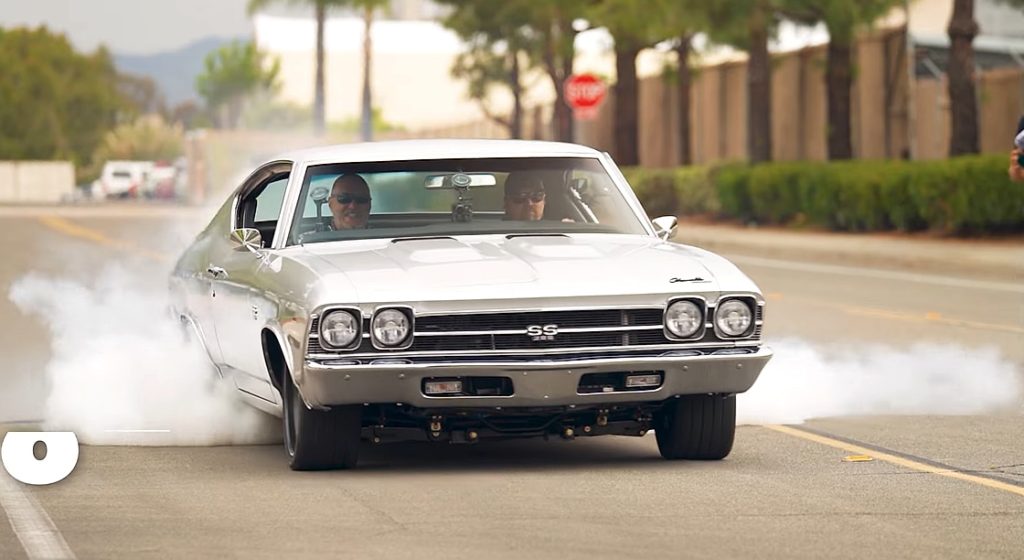
One of the biggest reasons this LSX-powered 1969 Chevy Chevelle works so well on the street is its built GM 4L80-E automatic transmission. In the LS swap world, the 4L80-E is widely respected for handling huge power while still delivering modern drivability. It’s essentially a heavy-duty evolution of the legendary TH400, with overdrive and electronic controls.
According to enthusiast forums such as LS1TECH and Yellow Bullet, a properly built 4L80-E can comfortably handle four-digit horsepower builds. This Chevelle reportedly runs upgraded internals and an aftermarket case rated for around 1,000 horsepower, making it more than capable of handling the car’s estimated 650 HP output.
The overbuilt setup improves durability, reduces stress, and keeps temperatures lower during spirited driving. Its overdrive gear also makes highway cruising far more comfortable, giving this pro-touring Chevelle the perfect balance between muscle car aggression and long-distance drivability.
How much does this build weigh?
While the exact weight of this LSX-powered 1969 Chevy Chevelle hasn’t been confirmed, builds like this typically weigh between 3,500 and 3,900 pounds. A factory ’69 Chevelle SS weighed around 3,700 pounds, but this pro-touring build uses a modern Roadster Shop-style chassis that improves rigidity, handling, and weight distribution.
The fully built 466ci LSX engine is also lighter than many traditional iron big-block setups, helping improve balance and steering feel. Despite retaining a full interior, a sound-deadened exhaust, and heavy-duty drivetrain components, the car’s estimated 650 horsepower gives it an impressive power-to-weight ratio that rivals that of many modern performance cars.
Can it pass emissions?
Whether this LSX-powered 1969 Chevy Chevelle can pass emissions depends largely on local laws. Technically, yes. A properly built LS swap can be emissions-compliant if it uses the right tuning, catalytic converters, EVAP systems, and ECU calibration. Modern LS engines are far cleaner than the original carbureted V8S, thanks to fuel injection, electronic ignition, and precise engine management.
This Chevelle runs a Holley ECU setup, popular in high-end restomod builds for its ability to precisely control fuel delivery, ignition timing, and drivability. Many aftermarket ECUs also support oxygen sensors and closed-loop fueling to improve emissions performance.
However, some states, especially California, require strict visual inspections and factory-style emissions equipment. Enthusiasts on LS1TECH often note that legality is usually harder than making the power itself. Still, this Chevelle’s quieter exhaust and refined setup suggest it was built to remain street-friendly and road legal.
The Holley ECU advantage
This LSX-powered 1969 Chevy Chevelle uses a Holley electronic setup and ECU, likely from the popular Terminator X or Dominator lineup commonly seen in high-end LS builds. Holley systems are widely respected in the LS swap community because they simplify tuning while offering advanced control over fuel delivery, ignition timing, transmission behavior, cooling fans, and throttle response.
Unlike factory GM ECUs, Holley systems are designed specifically for custom builds, making integration with components like the 4L80-E transmission much easier. Enthusiasts on LS1TECH frequently praise their flexibility and drivability. For a high-compression 466ci LSX engine, precise tuning is critical for both reliability and smooth street manners.
What makes this build special

For a 650-horsepower classic muscle car, this LSX-powered 1969 Chevy Chevelle is surprisingly reliable. The 466ci engine uses forged internals, including a Callies crankshaft, forged rods, and forged pistons, making it far stronger than a typical factory setup. Because the engine is naturally aspirated rather than turbocharged or supercharged, it experiences less stress and fewer heat-related issues.
Reliability is also helped by the built 4L80-E transmission, widely regarded by enthusiasts as one of GM’s toughest automatics. The builders clearly focused on balance rather than chasing extreme dyno numbers, opting for a refined chassis, high-quality brakes, and a quieter exhaust setup. Like any high-performance build, proper tuning and maintenance remain critical for long-term dependability.