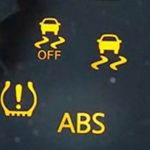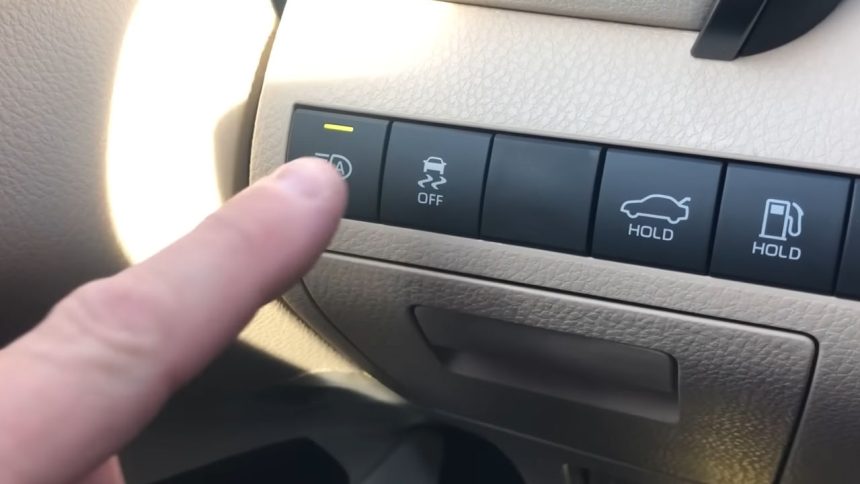
It could be a little frustrating when your vehicle’s Traction Control cuts power at low speed. But before we dive into that, it’s essential to understand what the TC (Traction Control) feature in a car actually does. We are all guilty of using car features we barely know how they work. The Traction Control feature in your car is a safety feature designed to prevent loss of grip between your vehicle’s wheels and the road surface.
But why does my car’s traction control cut engine power at low speed? Simple. Your TC feature will cut engine power when it detects wheel slip, receives faulty sensor data, or senses traction loss between the tires and the road surface – even when there isn’t. Remember, the primary function of your vehicle’s Traction Control feature is to maintain stability and ensure your car accelerates efficiently in low-traction conditions like snow, rain, loose gravel, or ice.
But why does this happen specifically at low speed? Well, the Traction Control feature is particularly sensitive at speeds below 18 mph (30 kph), where wheel-speed differences are easiest to detect. In this article, we will explain what causes this issue, how to diagnose it, and the exact steps to fix it.
Why does your vehicle’s Traction Control cut engine power at low speed

Your car’s Traction Control feature relies on wheel speed sensors to function effectively. Therefore, a single bad reading from these sensors could trigger traction loss. As a result, the most common cause of your vehicle’s traction control cutting engine power is a faulty wheel speed sensor. The symptoms vary from sudden loss of power to jerking to intermittent TCS/ABS lights popping on the dashboard.
Another reason your Traction Control cuts engine power at low speeds is a dirty, failing, or misaligned ABS tone ring. In case it is broken or cracked, it could send erratic signal spikes at low speed (when TC is most sensitive), triggering Tractrion Control. If your vehicle has throttle control issues or a failing throttle body, it could trigger Traction Control – but this only happens with vehicles with electronic throttle control (ETC). Additionally, in case the throttle body is dirty or there’s a glitch with the electronic throttle control, the system will cut power, assuming traction loss. Throttle control faults, in most cases, will trigger Traction Control intervention.
Sometimes, it’s as simple as low tire pressure or uneven tire sizes. Think about it. When the wheels are uneven or have low pressure, the system can mistakenly think the wheels are slipping. Also, poor connections between the ABS module, the Traction Control module, or the wheel sensors can cause intermittent power cuts.
How to stop power cuts from Traction Control

It’s essential to note that car manufacturers design your Car’s Traction Control feature to reduce power as the most effective and efficient way to stop the wheels from spinning. When a drive wheel loses grip, it is generally because the engine’s power is overpowering the tire’s ability to maintain grip or friction with the road surface. To correct this, the Traction Control system communicates with the engine and transmission control units to reduce the torque sent to the wheels.
The first line of action is to scan for codes – this is the fastest way to solve electronic issues, especially in modern vehicles. Use an OBD-II scanner, and scan for wheel sensor, throttle control, or ABS-related error codes. You’ll likely pull out the following codes from your scanner – C0035, C0040, P2135, C1234, among other related codes. Scanning error codes will pinpoint the exact location of the issue, eliminate other suspected causes, and, as a result, help you save a lot of money by buying only the parts you need.
If your scanner indicates a wheel speed sensor issue, it is advisable to inspect and clean the sensors before ordering a replacement. Check for mud, dirt, iron shavings, rust, or loose connectors. Additionally, check the tone rings for cracks – inspect the CV axles or hub tone rings. If you notice cracks, replace the axle or the ring, depending on the design. If your vehicle’s Traction Control cuts engine power at low speed due to a dirty or faulty throttle body, simply clean the throttle body and reset the throttle position. It’s advisable to have this done at a professional car repair shop.
Check for loose, corroded, or oil-contaminated pins on your ABS module connectors – this requires a professional diagnosis. Also, you could be experiencing TC issues due to tire pressure and tire matching faults – make sure all your tires match in size and pressure – a little difference in tire PSI (as little as 1-3 PSI) can trigger traction control at low speeds.
In case your vehicle’s Traction Control cuts engine power at low speeds but doesn’t display any codes, it might be the right time to seek professional help for a deeper ABS/TSC module diagnosis.